After taking a look at others blogs, I see that I’ve clearly missed the V&R map and I can’t figure out how to make one!! I apologize but hopefully it’ll be okay without one 🙂
What digital platforms are students currently using to develop their professional network?
Currently, students have come to network through lots of known platforms such as LinkedIn, Instagram, and TikTok, and these platforms are great and very helpful when aiming to network with new people, but, they are really only part of the picture. A lot of the valuable networking students do actually happens on Reddit and Discord. Subreddits based around a certain field let students see what professionals and other people are talking about, like career advice, hearing what courses to take, and not take, and honest questions people are too nervous to ask anywhere else. Discord servers can connect to programs, courses, or shared interests that make it feel like you’re talking with people who really get you and share a community with. These spaces also put students in contact with all kinds of people, from first years to people already working in the field you desire. The problem is that a lot of students use these platforms passively and just read without ever contributing. Social media is meant to be participatory (Clark & Aufderheide, 2011), so students who only view others are learning from their networks but staying invisible in them, which really limits how much their professional learning network can grow.
What could the student consider in expanding their professional learning network?
I think the main action students should take when trying to expand their PLN is to engage with the platforms in a more impactful way such as making the effort to actually reach out to those they admire and ask for personal advice or whatever it may be, just making that real person to person interaction is so much stronger than strictly watching what they do. Sending a genuine message to someone whose work you follow might feel intimidating at first, but lots of people are open to sharing advice, and want to help you better yourself. Once you make one connection, moving forward becomes so much easier and in my opinion, the biggest way to succeed is to put yourself in uncomfortable situations. If you start asking these people to grab coffee or set up a call, you develop a much stronger connection where you can ask more personal questions and get in contact with their connections, and that is the when a PLN stops being a place full of like minded, similar interest others, and into a new platform with more opportunities to learn new things.
How would an employer respond to your digital identity?
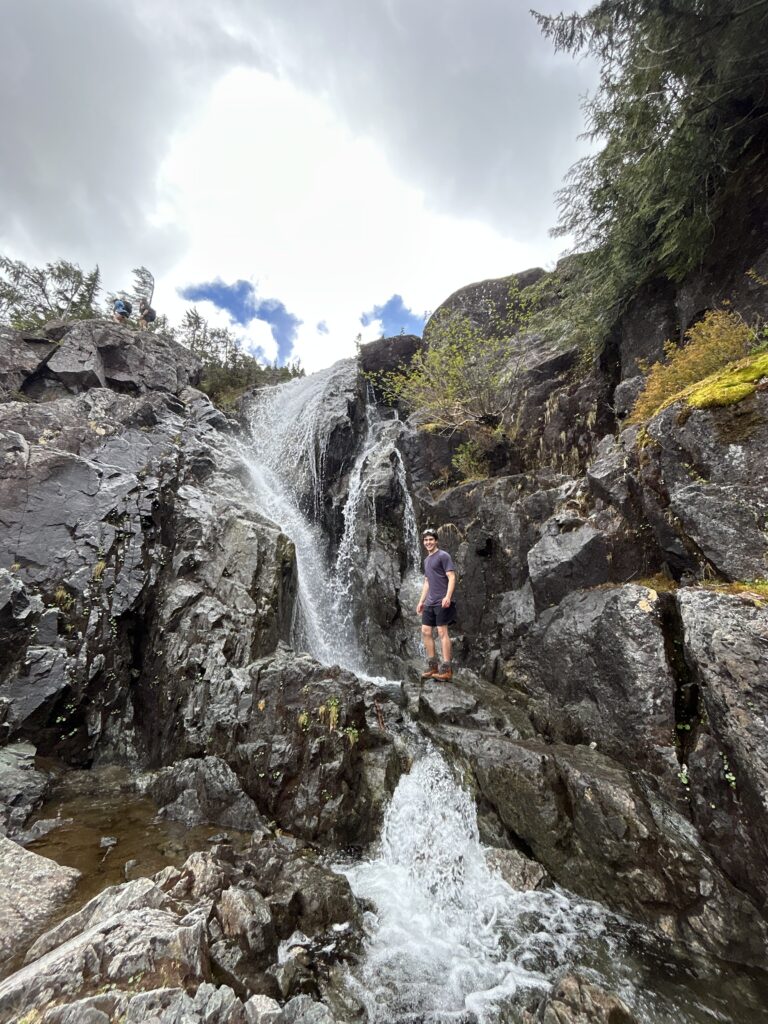
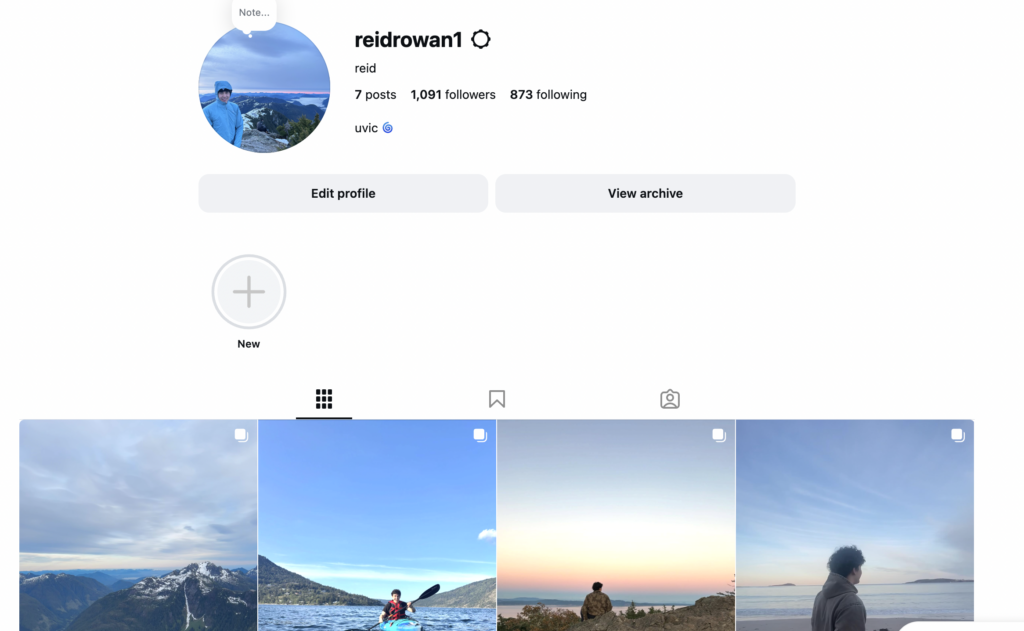
If an employer looked into my digital identity and did a background check of my social media accounts, I would feel comfortable that my accounts reflect me in a positive way that interprets what kind of person I am and would hopefully give me a better chance of getting that job. Overall my social media platforms show me off in an outdoorsy, active, and happy kind of way as I’ve always tried to stay away from posting any pictures or videos that could harm my self image. Looking into each platform, my Instagram account previews photos of me out in nature and doing things I enjoy, which I would be happy for an employer to see, as well as my linked-in account which is a professional account that I have no worries about. But thinking a little more now, if an employer went on my TikTok account, I fear I wouldn’t give off the same impression. Not that I post bad or inappropriate things on TikTok, but rather it’s an account with a few old videos of me from years ago not exactly in a suit and tie. Those videos are basically what White and Le Cornu (2017) call a “resident” trace, something you leave behind online that sticks around way longer than you’d expect, and it’s still part of the first impression an employer would get of me.
How does data privacy and security limit and/or promote a PLN?
Having privacy and the ability to control your social media appearance is extremely important and can impact a PLN for better or worse. Data privacy can be a great thing for reasons such as having the ability to control who sees your digital life as well as interactions because nowadays there are so many scam and fake accounts it can be hard and nerve wracking to think random people could be taking information from your personal account and making fake profiles or using it in ways you never agreed to. Having control over who sees what gives you the confidence to actually be online, because you know your personal life isn’t just sitting out there for anyone to take. On the other hand, too much privacy can work against a PLN. If every account is locked down and set to private, professionals and other people have no way of finding you, seeing what you’re about, or connecting with you. If someone came across your account and couldn’t see anything about you, they’d probably just move on, and that’s a missed connection you’ll never even know about. It’s kind of ironic because the same privacy that protects you is also what stops anyone from ever finding you. Overall, the important thing is having control over how you use your social media and being intentional about the kind of trace you leave behind (White & Le Cornu, 2017).
How can you create a digital identity reputation?
A digital identity reputation can be created by the kinds of thing you generally post, like, and interact with others. If your someone who always posts memes on your public story for everyone to see, you’ll develop a reputation for posting on your story and you’ll develop a reputation for being the funny, casual account people generally scroll past, which is fine between friends but probably not the impression you want a future employer or professional connection to remember you by. You can create a digital identity by deciding how you want to present yourself on social media to others. Maybe you want people to see your weekend hikes, your summer recap, or maybe you want to keep a low posting professional identity, these are all ways to create a digital reputation.
Section 2
How diverse is your PLN?
As someone who attempts to develop my PLN and meet new people I can better myself with, I’d say I’m not extremely diverse. My goal is to use my social media platforms for mainly networking purposes and make as many connections as possible to put myself in a better position and create opportunities through hearing new perspectives, but this is harder than it seems. For starters, I have a tough time going out of my way to message others and ask for advice or if they’d like to meet up and chat and I think this ultimately stems from an inner ego and insecurity of mine where I don’t want to seem worse off or less knowledgeable than someone else. Because of this, most of the people in my PLN are quite similar to me. Other students, people my age, and accounts that follow a similar trend of things I choose to like.
Are you learning from a variety of diverse voices and are you expanding your understanding of the views of others?
As I try to get out of my comfort zone and reach out to new people, I’ve found myself adapting different traits throughout my new networks, for example I reached out to the person named MK as I really liked his videography and film making. After staying connected for a while, we’ve created a close friendship and I find myself following many traits I’ve noticed he has such as being much more expressive and vocal about my opinion when I hadn’t used to. It’s simple things like this that make networking so important and valuable because as you keep meeting new people, you pick up new things that are unique to that person and eventually have knowledge in many different areas.
What is a learning outcome of your PLN, and how are you ensuring your exposure to diversity and inclusion?
My learning outcome for my PLN is to get out of my comfort zone and create a network of people I can learn new skills from whether that’s from a school perspective, athletic perspective, or even to create a stronger mental health. Going forward, I plan to reach out to more people on a regular basis and try and use the connections I already have to better myself and meet more people. An example of this can be seen as going out with one close friend and a bunch of their friends, instead of just sticking around who I know, I am challenging myself to connect with others and make new connections.
How has your thinking about inclusion and PLN evolved?
My thinking about the two have changed after reading and watching the video provided as I always thought of being inclusive by inviting people to come along to events and when someone who is generally more shy didn’t want to, I would try and be inclusive and convince them to join. After reading the article by Shelley Moore and Leyton Schnellert, I realized that being inclusive isn’t forcing someone to do something when they don’t want to, but rather giving them the opportunity and letting them decide whether they would like to or not (Moore & Schnellert, 2019).
Social media helps shape the way people communicate today. It engages communication by connecting people from all over who probably would’ve never connected and giving a platform to voices that wouldn’t normally be heard. But it also challenges it because things like opinions, words people use, and what you choose to like can get taken out of context so easily and everything you post kind of just sticks around forever. Whether it’s actually inclusive really depends on how you choose to use it, because you can have a private social media presence where you don’t allow anyone anyone to see anything about you, or you can have thousands of followers and be inclusive with everyone you interact with.
My person PLN definitely amplifies the views of others as I take a lot of inspiration from people and try to reincorporate the things I like from others into my own PLN. This can be seen from things like the way others format their posts or totally different like the wording I use to create my profile. Looking into the policies employers would expect you have when looking into a profile, I think it’s important to make your platforms show you in the best light possible and to never post anything that could harm your personal image. This can be seen as posting pictures smoking, vandalizing, or honestly just not looking professional, for example posting a picture of me on the street at four am would probably not be something an employer would want to see.
The benefits to having a diverse and inclusive PLN are that you present yourself in a welcoming, mature, and professional kind of way that allows others to get a real understanding of the kind of person you are. On top of that, being connected to all kinds of different people allows you to constantly learn things you wouldn’t have on your own and whatever you put out there has the chance to reach way more people than just the same small group you already know.
References:
Clark, J., & Aufderheide, P. (2011). A new vision for public media: Open, dynamic, and participatory. In S. C. Jansen, J. Pooley, & L. Taub-Pervizpour (Eds.), Media and social justice (pp. 55–67). Palgrave Macmillan.
White, D. S., & Le Cornu, A. (2017). Using ‘visitors and residents’ to visualise digital practices. First Monday, 22(8). https://doi.org/10.5210/fm.v22i8.7802
Moore, S., & Schnellert, L. (2019). One without the other: Stories of unity through diversity and inclusion. Portage & Main Press.